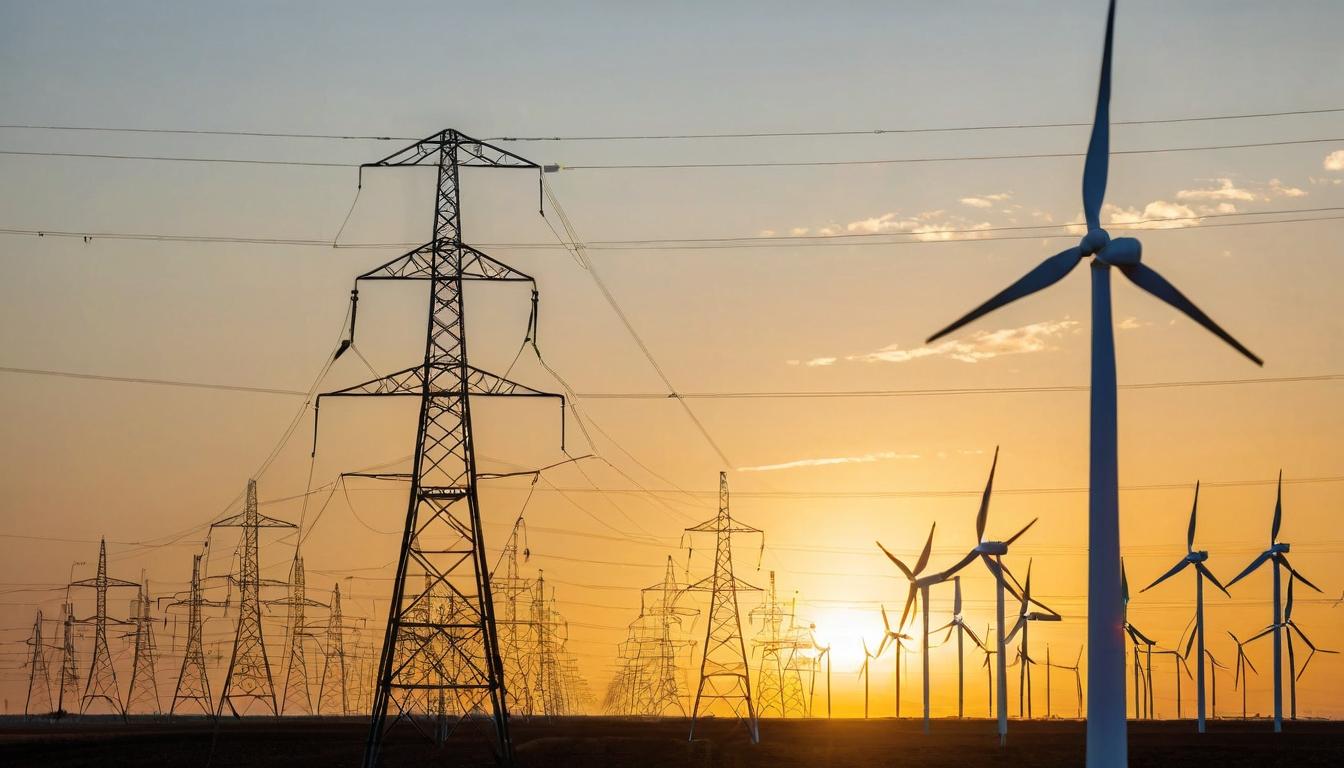
In the sprawling control rooms of America's regional grid operators, a quiet panic is brewing. While headlines celebrate record-breaking solar installations and wind farms stretching to the horizon, the engineers tasked with keeping the lights on are facing a dilemma no one wants to talk about. Our century-old grid, built for predictable coal plants and nuclear reactors, is fundamentally incompatible with the intermittent, decentralized energy future we're racing toward. This isn't just a technical challenge—it's a systemic failure in the making, and the clock is ticking.
Across the Midwest, where wind turbines now dot landscapes like mechanical forests, grid operators are paying customers to turn off their renewable generators during sunny, windy afternoons. They call it 'curtailment,' a polite term for wasting clean energy because the wires can't handle it. In California, where solar panels blanket rooftops, the famous 'duck curve'—the sharp dip and spike in net electricity demand—has become a daily crisis, forcing gas plants to ramp up violently as the sun sets. These aren't isolated glitches; they're symptoms of a grid having an allergic reaction to the very solutions meant to save it.
Meanwhile, in boardrooms from Houston to New York, utility executives are grappling with a financial paradox. Their traditional business model—earning returns by building more power plants and transmission lines—is colliding with a future where efficiency and distributed resources reduce the need for both. Some are innovating, investing in grid-edge technologies like virtual power plants that aggregate home batteries. Others are digging in, lobbying for fees on solar customers and fighting to preserve the old ways. This tension is creating a patchwork energy landscape where progress depends on your zip code.
Beneath the surface lies the real bottleneck: transmission. Building new high-voltage lines to connect windy plains and sunny deserts to cities takes over a decade, mired in permitting battles and 'not in my backyard' protests. The Department of Energy estimates we need to expand transmission systems by 60% by 2030 to meet clean energy goals. At current rates, we'll be lucky to hit half that. Every day of delay locks in more fossil fuel generation, making climate targets recede like mirages.
But here's the twist: technology might be outpacing the problem. Advanced inverters, AI-driven grid management, and long-duration storage breakthroughs are emerging faster than regulations can adapt. In Texas, where the grid operates independently, tech companies are piloting microgrids that could operate like energy islands during outages. In New England, offshore wind farms are being designed with built-in grid-forming capabilities that actually stabilize the network rather than stress it. The tools exist; what's missing is the political will and regulatory agility to deploy them at scale.
This story isn't about doom—it's about disconnect. We're celebrating renewable milestones while ignoring the crumbling foundation they stand on. The energy transition isn't just swapping coal for solar panels; it's rewiring the nervous system of modern civilization. And right now, that nervous system is sending conflicting signals, threatening to short-circuit the entire project. The solution won't come from one silver bullet, but from thousands of innovations in technology, policy, and business models, woven together with the urgency this crisis demands. Our energy future isn't just being built in solar fields and wind farms—it's being decided in control rooms, courtrooms, and living rooms across the country, one precarious electron at a time.
The grid's hidden crisis: Why our energy infrastructure is quietly failing the renewable revolution